

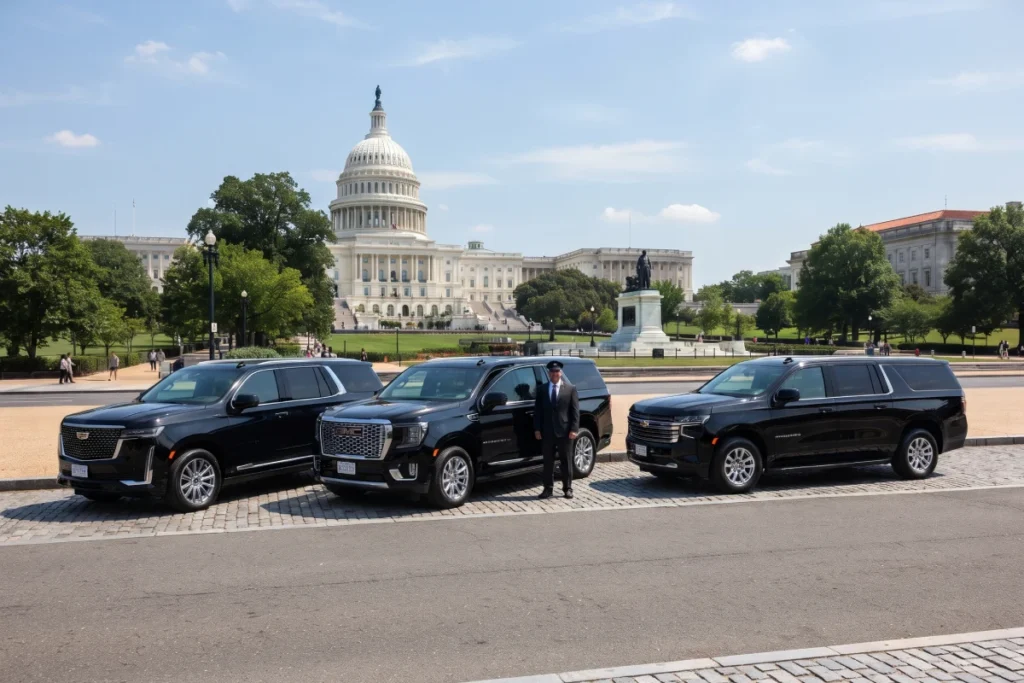
What is an SUV? An SUV is a comfortable, functional and versatile passenger car. SUV is an acronym for sport utility vehicle. So, what is a sports utility vehicle? Consider a higher car with a spacious cabin, higher ground clearance, and raised seating. The SUV meaning has changed over time. Old SUVs are designed for off-road activities and rough roads. For daily commutes, family trips and long-distance driving, modern models are also suitable. They include small city cars, as well as big luxury cars that offer space for three rows of seats.
This guide will help you understand what an SUV is, what the definition of an SUV states, the various types of SUVs, and how to choose the right one for you.
SUV Definition: What Does SUV Vehicle Mean?
So many people ask, “What does SUV mean?” or “what is meaning of suv .” Well, it’s very simple. The SUV definition relates to a vehicle that is designed to transport passengers, but also provides utility, including having extra cargo space and a higher body.
The definition of SUV automobile in simple terms. The SUV is an all-purpose, high-roofed, high-sit passenger car. There are also all-wheel drive or four-wheel drive models.
So, if you ask yourself, What is the definition of SUV or What is the meaning of SUV, it’s the same thing! It seems that people also ask, “What is a SUV vehicle?” or “What is a SUV car?”. The two questions are referring to the same type of vehicle.
Understanding what an SUV is will make it easy to understand why they are such popular vehicles. They provide comfort, space and options for the drivetrain for a wide-range of driving situations.
What Does SUV Stand For?
SUV is short for Sport Utility Vehicle. SUV vehicle is a full form of a vehicle that is used for transportation of passengers and for utility purposes.
SUV stands for Suited Vehicle and is widely used in the automotive industry. It typically refers to cars with the following characteristics:
- Higher ground clearance.
- Spacious passenger cabins.
- Flexible cargo areas.
- Higher seating positions.
- All wheel drive or four wheel drive options.
The first concept for an SUV was due to rough weather driving. There are lots of different shapes for SUVs these days. Some people are motivated to save fuel; some are thinking about city comfort. There are others who concentrate on towing capabilities, passenger room and off-road power.
What Makes a Car an SUV?
The boundaries of an SUV and a car are sometimes indistinct, so it can be hard for people to know what makes a car an SUV. These are the qualities sought by all experts:
- Improved ground clearance for use on snow, gravel, speed bumps and flooded roads.
- Elevated body and seating position, for improved driver sight of road.
- A rear door that opens as a hatch and has a large, flexible cargo area.
- All-wheel or four-wheel drive – not all SUVs are equipped.
- Fold away rear seats to make the cabin a cargo hauler.
- Riding ability, which is greatly different in size and model.
When you see what is considered an SUV in a showroom, it usually ticks most of these boxes. If you are still asking yourself what is a SUV car or what is an SUV vehicle compared to a hatchback or wagon, think of ride height, space and capability together rather than any single feature.
Is SUV a Car?
Yes. An SUV is a passenger vehicle, and belongs to the larger class of automobiles. It’s a bit different from standard vehicles, such as sedans and hatchbacks, in its body, seating height and utility.
People particularly use the term “car” to refer to an SUV in their everyday speech. In car classification, an SUV is typically defined to be its own body style. So, the answer to the SUV a car question is a resounding yes, but it’s a different kind of car.
There are also differences in construction of SUVs. Others employ a unibody platform similar to what many passenger vehicles have. Body-on-frame design is a common component of traditional off-road vehicles.
What Are the Different SUV Size Categories?
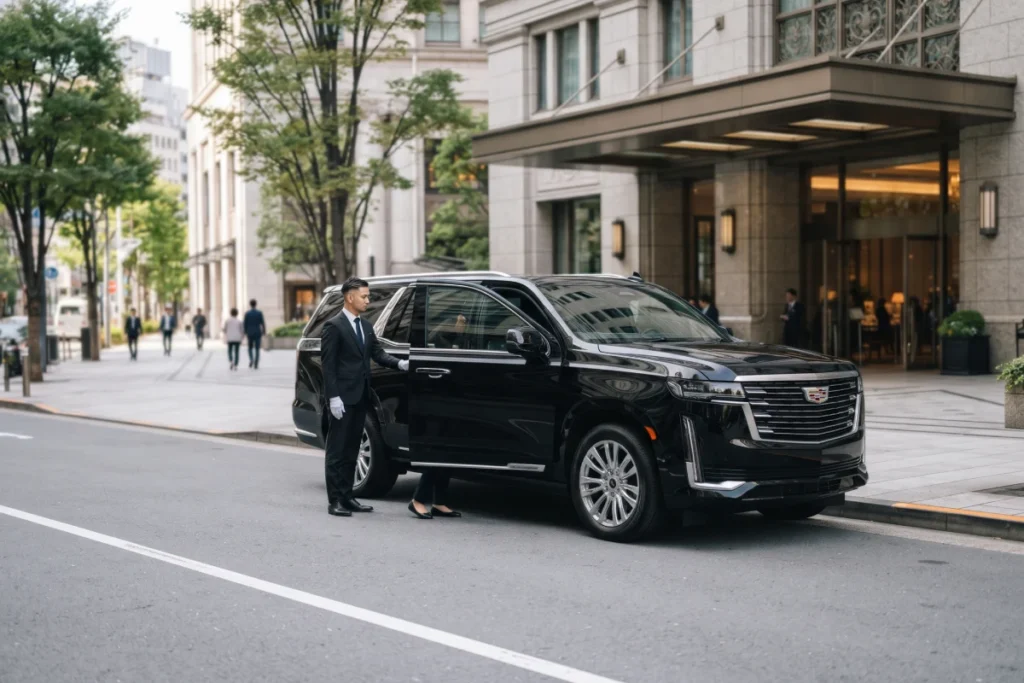
Understanding SUV size categories is the best way to avoid buying too much or too little vehicle. Manufacturers and review sites use slightly different names, so the same car can be called “compact” in one place and “midsize” in another. The table below gives a simple overview.
| Category | Typical Seating | Typical Width (without mirrors) | Example Models |
| Mini / Small | 4-5 | 66-70 in | Hyundai Venue, Kia Sonet |
| Subcompact | 5 | 69-72 in | Hyundai Kona, Chevrolet Trax |
| Compact | 5 | 71-75 in | Toyota RAV4, Honda CR-V, Mazda CX-5 |
| Midsize (Standard) | 5-8 | 74-79 in | Toyota Highlander, Kia Telluride, Chevrolet Traverse |
| Full-Size (Large) | 7-9 | 79-82 in | Chevrolet Tahoe, Ford Expedition, GMC Yukon |
These figures are approximate and vary by model year, but they help answer a common question: how wide is an average SUV? Average SUV width is roughly 72 to 80 inches (about 183 to 203 cm), without the side mirrors. Always measure your garage before you buy a larger model.
What Is a Small SUV?
If you are wondering what is a small SUV, it is typically a mini or subcompact model, short enough for city streets and easy parking. People also ask what is a good small SUV. Good options are usually efficient, easy to drive and reliable, such as the Honda HR-V, Mazda CX-30, Toyota Corolla Cross and Hyundai Kona. For those searching for the best used small size SUV, look for a one-owner car with full service records, a clean accident report and a reputation for low repair costs.
What Is a Compact SUV?
A compact SUV is a little bigger than the smaller SUV and is the perfect size for a lot of buyers. So, what is considered a compact SUV? Normally, it is about 170-185 inches long and has an approximate cargo capacity behind the rear seats of 35-40 cubic feet.
Additionally, plenty of shoppers are looking for what is a compact crossover vehicle. In majority, this is the same vehicle. They’re called SUVs but they’re compact crossovers based on car platforms, such as the RAV4 and CR-V.
- If you are comparing compact SUV options, here are the questions to ask:
- Need all-wheel-drive or is front-wheel drive adequate?
- Is a hybrid worth the higher price for your daily mileage?
- Do you have enough room for your strollers, sports items or groceries?
Toyota, Honda and Mazda were always in the top tier when it came to long-term reliability for those wondering, what is a good compact SUV or what is a good reliable SUV. When it comes to the most reliable compact SUV 2025 lists recommended, the Toyota RAV4 (particularly the hybrid), Honda CR-V, and Mazda CX-5 were popular choices. Please note: Reliability ratings vary by year and model year, so be sure to verify the most current information for the year in which you are interested.
What Is a Midsize SUVs?
This brings the question: What is a mid size SUV? It’s larger than a compact, typically two or three row, 190 to 200-inch long vehicle, has more room in the cab and has more towing capacity. It’s the size that many families will select if a compact feels cramped.
Owners frequently ask what SUV is the same size as Chevy Traverse. It’s a midsize 3-row SUV, so it has competition from similar-size models like the Honda Pilot, Toyota Grand Highlander, Kia Telluride, Hyundai Palisade, Ford Explorer and Volkswagen Atlas. Measure size inside, not length, as there can also be a lot of variation in cargo space behind the third row.
What Is a Standard SUV?
Some buyers ask what is considered a standard SUV. In many guides, “standard” simply means midsize, the default size most people picture when they imagine an SUV. This is also where the question what is the difference between a standard and midsize SUV comes up. In most cases there is no difference. The two labels describe the same group. Some brands, though, use “standard” for slightly larger vehicles that sit between midsize and full-size, so always compare actual dimensions and seat counts instead of relying on names.
What Is an Full-Size SUV?
So, what exactly is “full size SUV?” It’s a three-row, typically body-on-frame pickup truck that seats seven to nine passengers, has a large cargo bed and strong towing capabilities of roughly 8,000 to 9,000 pounds with the appropriate equipment. The Chevrolet Tahoe, Ford Expedition and GMC Yukon are the classic models and the Lincoln Navigator full size SUV falls at the high end of the group.
When comparing midsize vs full size SUV models, this is the easy way to do it:
- Midsize: can be parked easily, has good fuel economy, and is less expensive; third row is best for kids or short trips.
- Full-size: More cargo space, an adult third seat, better towing capabilities, but more expensive and consumes more fuel.
That’s also the answer to the question: what is the difference between a midsize SUV and a full size SUV? The primary differences come down to size, towing and third row comfort and cost.
What Is a Large SUV?
When you ask yourself, ‘What is a large SUV?’, the answer is basically the same as ‘full size’. A large SUV is the largest regular SUV that you can purchase, prior to the commercial type vehicles. Most brands will offer more hybrid options and enhanced safety features, and include new tech in the large SUV 2026.
A good large suv interior will have three seating positions, wide centers, large touchscreens, rear entertainment, and there will be plenty of storage. Want to find large suv models with 3rd row seating ? These vehicles include the Chevrolet Suburban, Chevrolet Tahoe, GMC Yukon XL, the Ford Expedition Max, the Nissan Armada and the Lincoln Navigator and the Jeep Wagoneer L.
Crossover SUVs
The car platforms are used for constructing crossovers, not the truck frames. They are the most prevalent vehicles of the day that come in SUV form and we’ll cover this in more detail later.
SUV vs Sedan vs Crossover: What Are the Main Differences?
People also search for what is the difference between a sedan and an suv? Or what is the difference between a standard and midsize suv? SUVs also come in different sizes, including midsize and full-size. This table shows the main differences:
| Feature | Midsize SUV | Full-Size SUV | Sedan | Traditional SUV | Crossover |
| Exterior size | Medium | Large | Usually compact to large | Medium to large | Small to large |
| Body design | Taller body | Larger, taller body | Lower, streamlined body | Often rugged and tall | SUV-inspired design |
| Construction | Usually unibody | Unibody or body-on-frame | Usually unibody | Often body-on-frame | Usually unibody |
| Ground clearance | Generally higher | Generally higher | Generally lower | Often higher | Moderate to higher |
| Seating capacity | Usually 5–7 | Often 6–8 | Usually 5 | Varies by model | Usually 5–7 |
| Cargo space | Moderate to large | Generally larger | Separate trunk | Often spacious | Flexible cargo area |
| Driving comfort | Suitable for daily and family use | Spacious but less maneuverable | Comfortable for road driving | Depends on design | Often car-like |
| Off-road capability | Depends on drivetrain | Varies by model | Generally limited | Often stronger | Usually suited to light off-road use |
| Parking | Relatively manageable | More challenging | Generally easier | Depends on size | Often easier than larger SUVs |
| Best suited for | Families and everyday driving | Large families and extended travel | Commuting and regular road use | Utility and off-road driving | City driving and family transportation |
What Are the Main Features of an SUV?
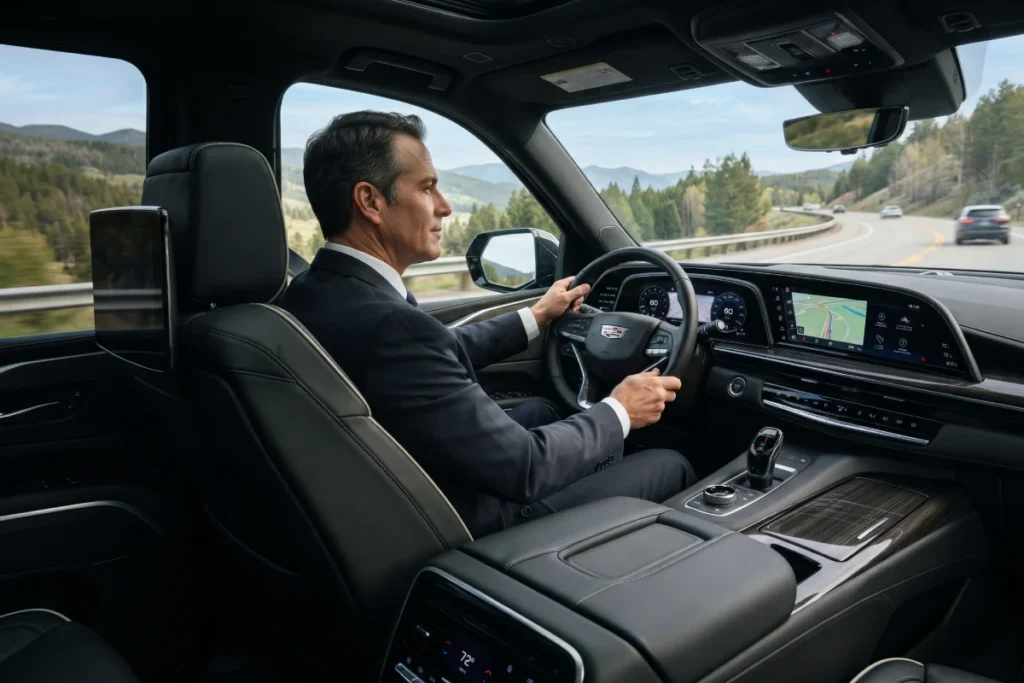
Knowing the meaning of SUV and the type of SUVs, let’s take a look at the features of most of those SUVs.
- High ride height and bumpy surface.
- All-wheel or four-wheel drive for enhanced traction in rain, snow and mud conditions.
- Large cargo space, with power liftgate and sometimes fold-away seats.
- Flexible seating, ranging from five seats to up to nine with the largest models.
- On several mid and full-size packages, it is possible to tow packages.
- Advanced safety features such as automatic emergency braking, lane-keeping assist and blind-spot monitoring.
- Comfort features such as heated seats, panoramic roofs and multi-zone climate control.
If comfort is your priority, look for an SUV with comfortable seats. When test driving a vehicle, look for the following features: soft, but not squishy, cushioning, ventilated or heated seats, supportive lumbar adjustment, and good thigh support. Volvo, Lexus, Genesis and Mercedes-Benz are regarded as having particularly comfortable seats, whereas the Toyota Highlander and the Hyundai Palisade are both great value for money.
Are SUVs a Practical Choice for Everyday Driving?
When it comes to commuting daily, SUVs can be a good option for those who prioritize comfort, a spacious seating arrangement, and storage options. To illustrate, think of the ordinary routine that includes going to work, going shopping, driving children to school, and traveling on weekends. An appropriately sized SUV should be able to perform all these tasks without the need to buy additional cars for other functions. Below are the reasons proving the efficiency of driving an SUV every day:
- Comfortable Seats: A high seat position along with a wide enough cabin help ease even short trips.
- Versatility: A foldable seat and big openings can facilitate cargo transport including groceries, luggage, and daily essentials.
- Passenger Capacity: A spacious interior of SUVs can accommodate big families including extra passengers.
- Good Safety Systems: Different parking cameras, parking systems, and driver tech can turn driving in the city into a cakewalk.
- Sizes: Small SUVs are obviously better for driving in crowded streets than bigger SUVs. Nevertheless, there can also be some disadvantages related to SUVs, for instance, too large full-size cars may not be the best option for narrow streets driving.
For everyday commuting, a compact or smaller midsize SUV may be a more practical choice than a much larger model.
What Are the Advantages and Disadvantages of SUVs?
Advantages
- Space and versatility: conveniently move kids, pets, luggage and equipment.
- Easier to see traffic: higher seating position provides better visibility.
- Available AWD and increased clearance in snowy and wet conditions.
- Better entry/exit: particularly beneficial for older persons and those with mobility issues.
- Towing Abilities: Boats, Campers and Small Trailers.
- Popular models – good resale value.
Disadvantages
- More expensive: SUVs are typically more expensive than sedans of a comparable quality.
- Reduced fuel efficiency: greater frontal area and weight translates to more fuel consumption.
- Parking and manoeuvring: larger models can be difficult to park and manoeuvre.
- Handling: they will have more body roll in corners with a taller body.
- Rollover risk: this has been significantly lowered by new stability control systems but is still higher on taller vehicles.
- Wheel size and tires: changing bigger wheels and tires can be more costly.
How Do You Choose the Right SUV?
With so many options, a short checklist helps. Start by thinking about who will ride in the vehicle, how you will use it and what you can afford to own over several years, not just buy.
1. Decide on size. Use the size categories above. Singles and couples often do well with a small or compact SUV. Growing families should look at midsize. Large groups should consider a full-size.
2. Count your seats. If you regularly carry more than five people, you need a third row. For readers asking what is the best SUV for a family or what is a good family SUV, the Toyota Highlander, Honda Pilot, Kia Telluride, Hyundai Palisade and Subaru Ascent are consistent favorites. For a bigger group, such as an SUV for a family of 7, look at three-row models where adults can actually sit in the third row, like the Chevrolet Tahoe, Toyota Grand Highlander or Kia Telluride.
3. Look at third-row quality. If you want the best SUV with 3rd row seating, test the third row yourself. Check legroom, ease of entry, cargo space with the third row up and whether child seats fit properly. Full-size models almost always win here.
4. Think about who is driving. People asking what is a good SUV for seniors should prioritize easy entry height (hip-level seats are ideal), wide door openings, supportive seats, good visibility, simple controls and driver-assist features. Compact crossovers like the Honda CR-V, Toyota RAV4, Subaru Forester and Hyundai Tucson tend to work very well.
5. Consider new vs. used. Many readers ask what is a good SUV to buy used. Look for models with strong reliability records, such as the Toyota RAV4, Honda CR-V, Mazda CX-5, Toyota Highlander and Subaru Outback. A used Lexus SUV like the RX or NX is also a smart choice, offering premium comfort and long-term durability at a lower price than new. Always get a pre-purchase inspection and review the service history.
6. Choose the right powertrain. Gasoline is simple and affordable. Hybrids save fuel, especially in city driving. Plug-in hybrids and fully electric SUVs offer even lower running costs if you can charge at home.
7. Set a budget. Include insurance, fuel, maintenance, tires and depreciation.
What SUV Is the Best?
The honest answer to what SUV is the best is that it depends on your needs. Here is a quick guide:
- Best compact SUV: Toyota RAV4 or Honda CR-V for reliability and resale value.
- Best midsize SUV: Kia Telluride or Hyundai Palisade for value and features.
- Best full-size SUV: Chevrolet Tahoe or GMC Yukon for space and towing.
- Best small SUV: Mazda CX-30 or Honda HR-V for fun and efficiency.
These are only starting points, so always test drive before you decide.
Luxury SUVs: What They Are and What They Cost
So, what is a luxury SUV? It is an SUV that offers premium build quality, refined materials, advanced technology, a quiet ride and strong performance, usually from brands like Mercedes-Benz, BMW, Audi, Lexus, Volvo, Genesis, Porsche, Cadillac and Lincoln. Luxury SUVs can be any size, from compact to full-size.
Best Small Luxury SUV Options
If you want the best small luxury SUV, a few models stand out: the Lexus UX and NX, the BMW X1, the Audi Q3, the Mercedes-Benz GLA and GLB, the Volvo XC40 and the Genesis GV60. They give you premium comfort in a size that is easy to park and easy on the wallet.
Luxury Hybrid SUV 7 Seater Choices
Families who want a luxury hybrid SUV 7 seater have a growing choice. Options include the Lexus TX hybrid, the Volvo XC90 plug-in hybrid, the Toyota Grand Highlander hybrid in a more upscale trim and several plug-in versions from European brands. These offer a quiet cabin, good fuel economy and three rows of seats.
Mercedes SUVs: Charging Cost and Maybach Price
Buyers interested in electric luxury often ask about the average charging cost for a Mercedes SUV. For models like the EQE SUV or EQS SUV, a full home charge typically costs somewhere around 10 to 25 US dollars, depending on your electricity rate and battery size. Public fast charging costs noticeably more, so home charging is the cheapest way to go.
At the very top of the market, the Mercedes-Maybach SUV price is far above that of a regular luxury model. The Mercedes-Maybach GLS, for example, starts well over 150,000 US dollars before options, and fully customized versions cost much more. Check the manufacturer’s current pricing, because figures change by year and by market.
Frequently Asked Questions About SUVs
What does SUV stand for?
SUV stands for Sport Utility Vehicle. It describes a category of passenger vehicles that combines practical utility, flexible interior space, and an elevated driving position.
Is an SUV considered a car?
Yes, an SUV is a type of passenger automobile. However, it has a different body style and construction from traditional sedans and hatchbacks.
What does an SUV look like?
An SUV generally has a taller body, higher ground clearance, an elevated seating position, and a rear cargo area connected to the passenger cabin. Its appearance varies depending on its size and design.
Do all SUVs have four-wheel drive?
No. Some SUVs use front-wheel drive or rear-wheel drive, while others offer AWD or 4WD. Buyers should check the specific drivetrain configuration before purchasing.
What is the difference between an SUV and a crossover?
Traditional SUVs often use body-on-frame construction, whereas crossovers generally use unibody construction. Crossovers typically provide more car-like driving characteristics, although both categories can offer passenger space and elevated seating.
What is the difference between a midsize and full-size SUV?
A midsize SUV is generally smaller and easier to maneuver, while a full-size SUV offers more cabin space, larger cargo capacity, and often greater passenger capacity.
What is a good compact SUV?
A good compact SUV should offer a practical balance of reliability, comfort, fuel efficiency, safety, and cargo space. The best option depends on the buyer’s budget and driving requirements.
What makes an SUV suitable for families?
Passenger space, child-seat compatibility, safety features, rear-seat comfort, and cargo capacity are important considerations when choosing an SUV for family use.
Can an SUV be used for off-road driving?
Some SUVs are specifically designed for off-road conditions and include suitable ground clearance, specialized suspension, and four-wheel-drive systems. However, ordinary road-focused SUVs may not be appropriate for challenging terrain.
Are SUVs more expensive to maintain?
Not necessarily, but some SUVs can have higher maintenance and running costs than smaller cars. Vehicle size, engine type, parts availability, tire prices, and maintenance requirements all influence ownership expenses.
Conclusion
SUVs have become a popular vehicle category because they offer a combination of passenger comfort, practical storage, and different driving capabilities. From compact crossovers designed for city commuting to full-size models built for larger families, there’s considerable variety within the category. But bigger isn’t always better. The most suitable SUV depends on passenger requirements, road conditions, fuel economy, parking space, and long-term ownership costs.
Understanding what an SUV is, how its different types compare, and what features matter most can help drivers make a more informed vehicle choice.